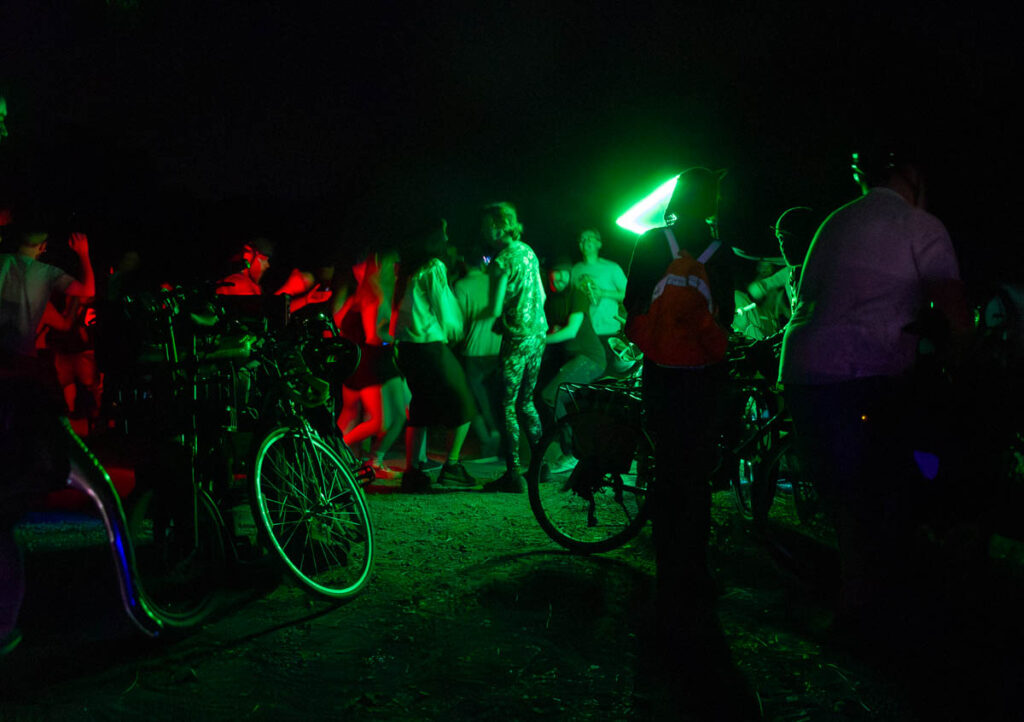
A crowd of people at night, lit by green and red LED lights including a triangular green flag, dancing among many bicycles.

Another year of keep’n it real

Last year I wrote about how DJing at East Bay Bike Party was a joyful way to contribute to the community, that feels important in these times even though Bike Party lacks an agenda. The joy, alone, is enough reason to keep it rolling in 2026. But I think what I’m observing is, within a creative community, joy is generative. Innovators will find ways to use joy to deepen community and further community goals. And every time I participate in one of these events, whether it’s Bike Party, or a wedding, or whatever’s going to come next in the Bay Area’s resistance to fascism, I feel a little less despair at the state of the world.
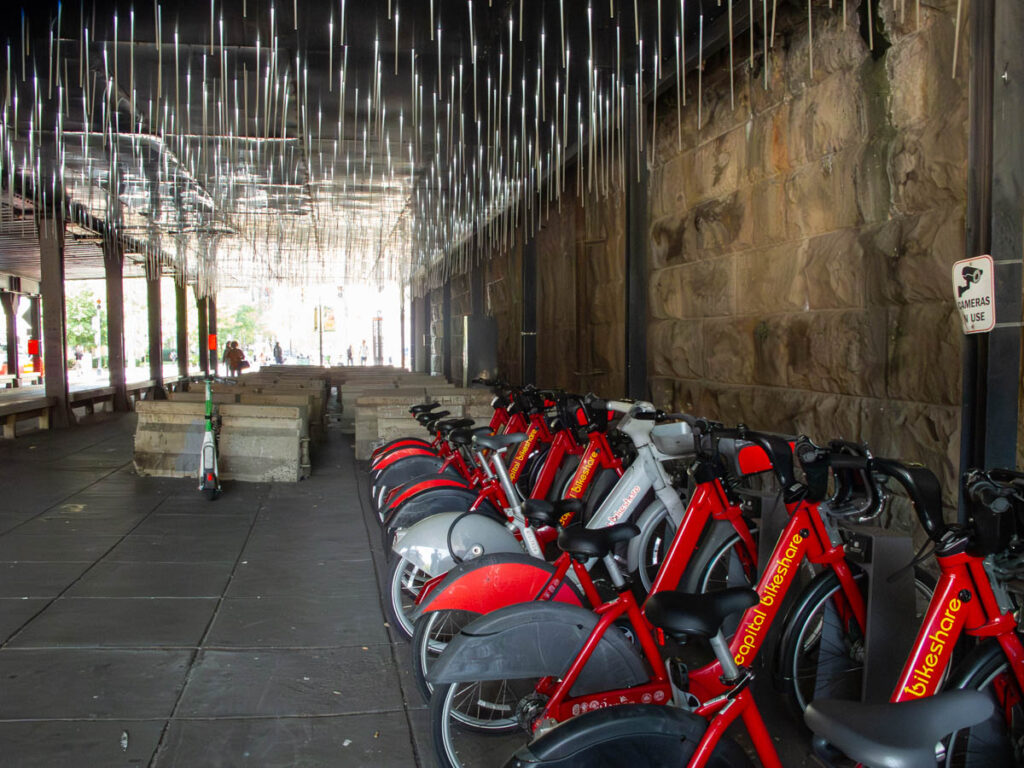
A wide sidewalk in an underpass. Fancy lights hang down from the ceiling. Near the camera there is a Capital Bikeshare station which is full, or nearly so, of red and orange bikes. Further away, two rows of concrete barriers take up space. There is one Lime electric scooter. Two pedestrians appear to be entering the underpass from the far side.

More field work in Washington

During Oakland’s ill-fated plan to sell out its waterfront to John Fisher, OakDOT presented an image from a Washington, D.C. underpass as a vision for pedestrian access under 880. That project was already a failure in 2022; I checked it out while visiting D.C., and found that it now has several bike-specific elements.

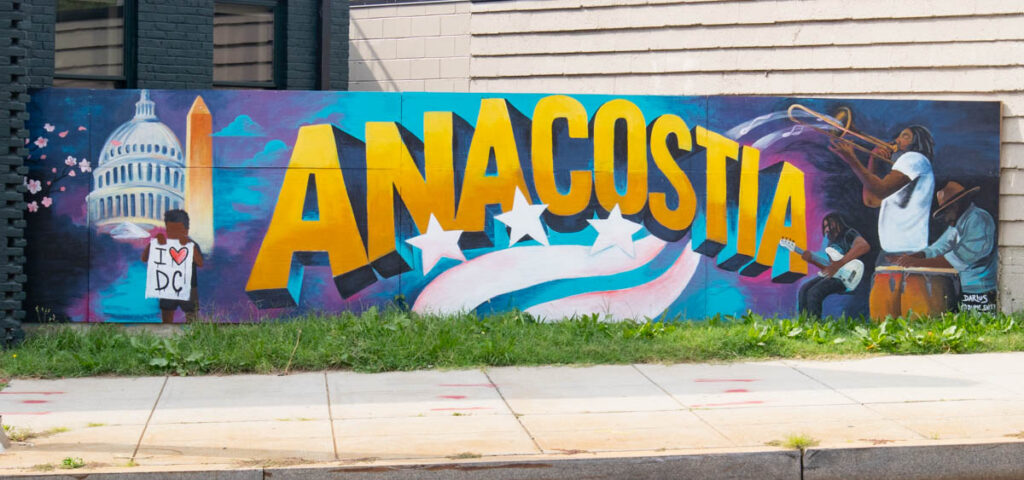
A wide mural on a fence reads "ANACOSTIA". On the left side of the mural are images of Washington, D.C.; the U.S. Capitol, the Washington Monument, and cherry blossoms. A black child holds a hand-made sign with dripping paint reading "I (heart) DC". On the right side of the mural, three Black musicians play (a guitarist, trombone player, and keyboard)

The Bike Lab visits Anacostia

In my series on neighborhood change along streets named for MLK, Washington, D.C.’s Anacostia neighborhood was identified as notable; between 2000 and 2017, Anacostia saw Black population increase, while median income also increased. That unusual pattern could represent development without displacement, the Holy Grail of community and economic development. The bicycle is the Bike Lab’s preferred data-gathering tool, so on a visit to DC, I had to roll through the neighborhood to get a better sense of it.

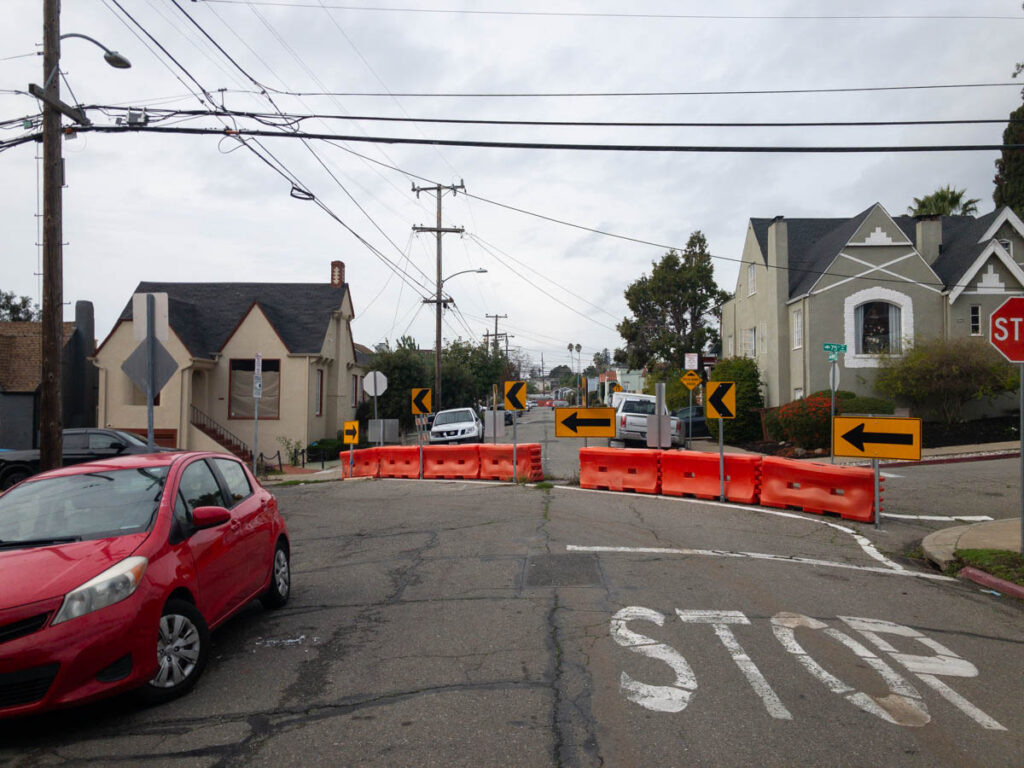
A residential street with somewhat broken-up pavement approaching an intersection with a faded STOP stencil painted in white. The intersection has seven large orange plastic highway barriers installed diagonally across it, with six visible reflective yellow directional signs. The back side of additional signs, presumably directing cars on the other side of the barriers, can also be seen. There is a small gap in the center of the barriers.

Letting the community lead

Oakland’s Department of Transportation continues to work towards aligning city practices with the values expressed in its Geographic Equity Toolbox. The latest example is a report on the community engagement for a now-adopted Community-Led Traffic Safety Pilot program, which was received very differently in neighborhoods which have a history of being harmed by infrastructure projects.

Keep’n it real

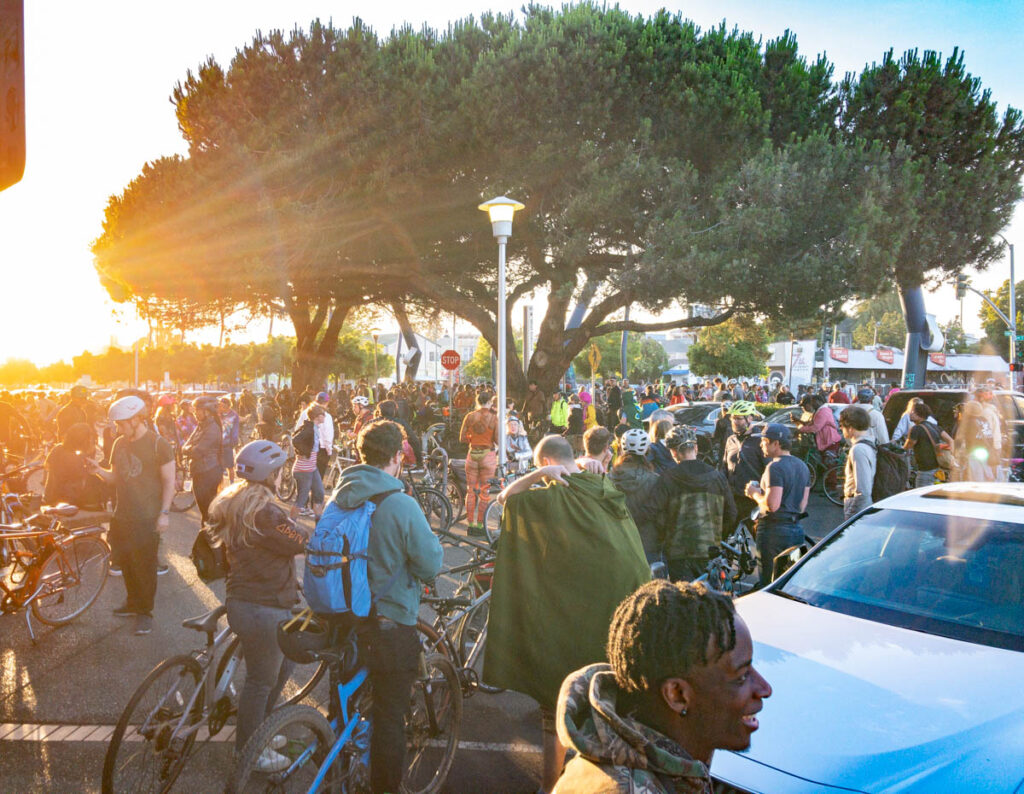
Social factors related to cycling are important, and poorly understood. I’ve tried to get connected with as many cycling sub-cultures as I can; one I’ve participated in for years is East Bay Bike Party. I’ve been DJ’ing at EBBP since I built a bike sound system as a COVID project, and I had an interaction this year that let me to consider the meaning of the EBBP community.

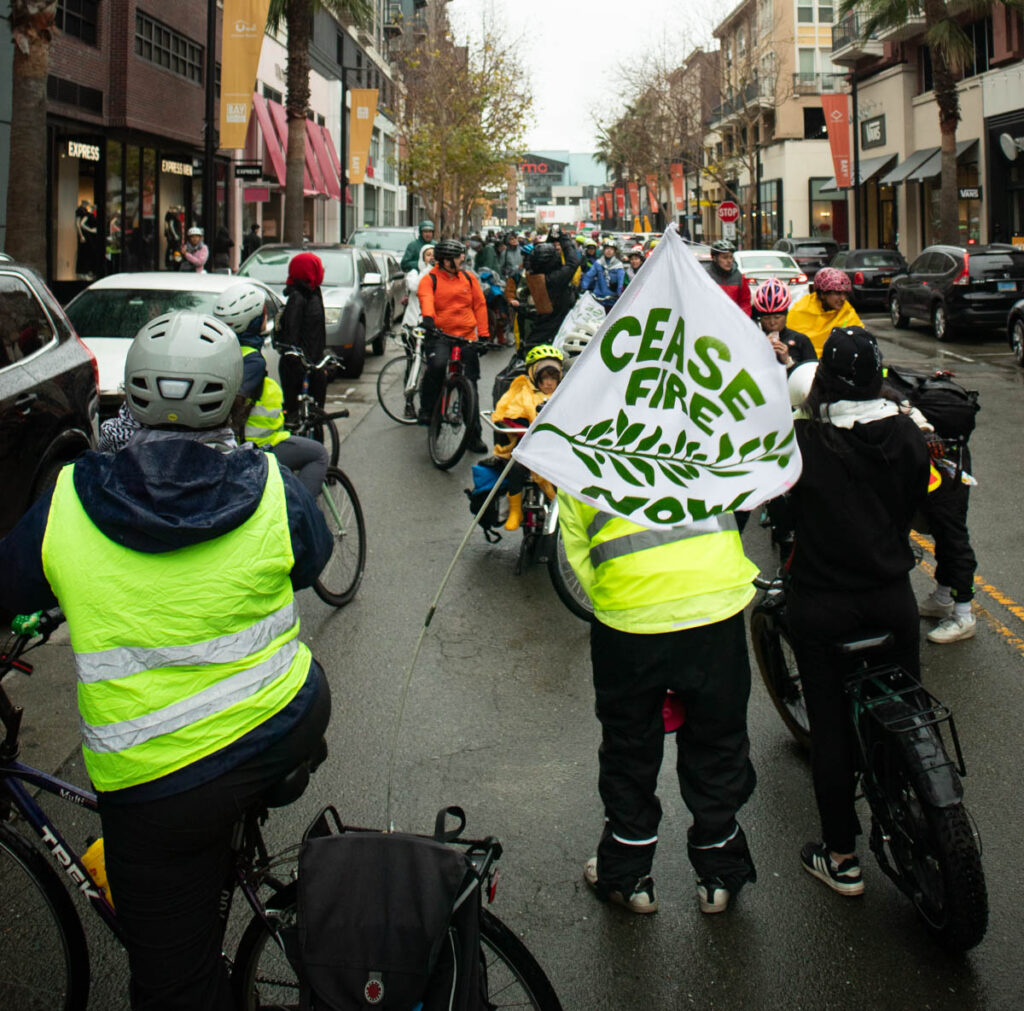
On a rainy day, dozens of bicyclists are standing in one lane of a two-lane commercial street. In the foreground are several people standing with their bikes, wearing yellow safety vests, facing the crowd. One of them has a flag attached to the bike reading, "Cease Fire Now."

The tool you have

The Bike Lab’s premise is that the bicycle can be a tool to understand and fight structural injustice. Bike riders everywhere share the same experience of freedom and mobility, and that shared experience can break down barriers and create new connections across communities. The Gaza Sunbirds sponsored a global solidarity ride in support of aid to Palestine, which created controversy in the East Bay bike community.

Scroll to Top