Opinon

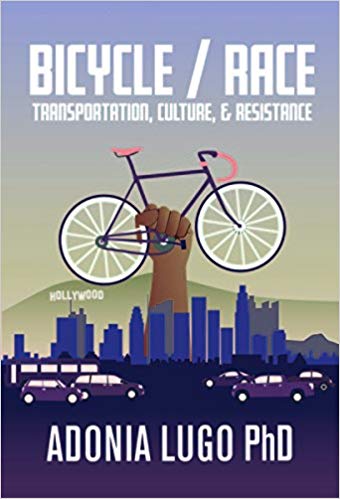
Book cover: Bicycle/Race. Transportation, Culture, & Resistance

Book review: Bicycle/Race

I was enthused to pick up a copy of Adonia Lugo’s latest book at the Bike4Justice event at Rich City Rides a couple months ago. I found it fascinating, but it wasn’t exactly what I had expected. Titled Bicycle/Race: Transportation, Culture, & Resistance, with cover art evoking Black power movements, I suppose that I anticipated something overtly political, a critical analysis of power dynamics related to cycling in the U.S. Instead, I found the book to be deeply personal, a memoir of Lugo’s own struggles to find a place for herself in cycling advocacy as a mixed-race woman from auto-centric Orange County. Lugo’s academic work is in ethnography, so it is not surprising that she is skilled at illuminating cultural and social frameworks via her lived experiences. As an ardent follower of Lugo’s work, the book helped me understand her perspectives, and how she arrived at her particular brand of advocacy.
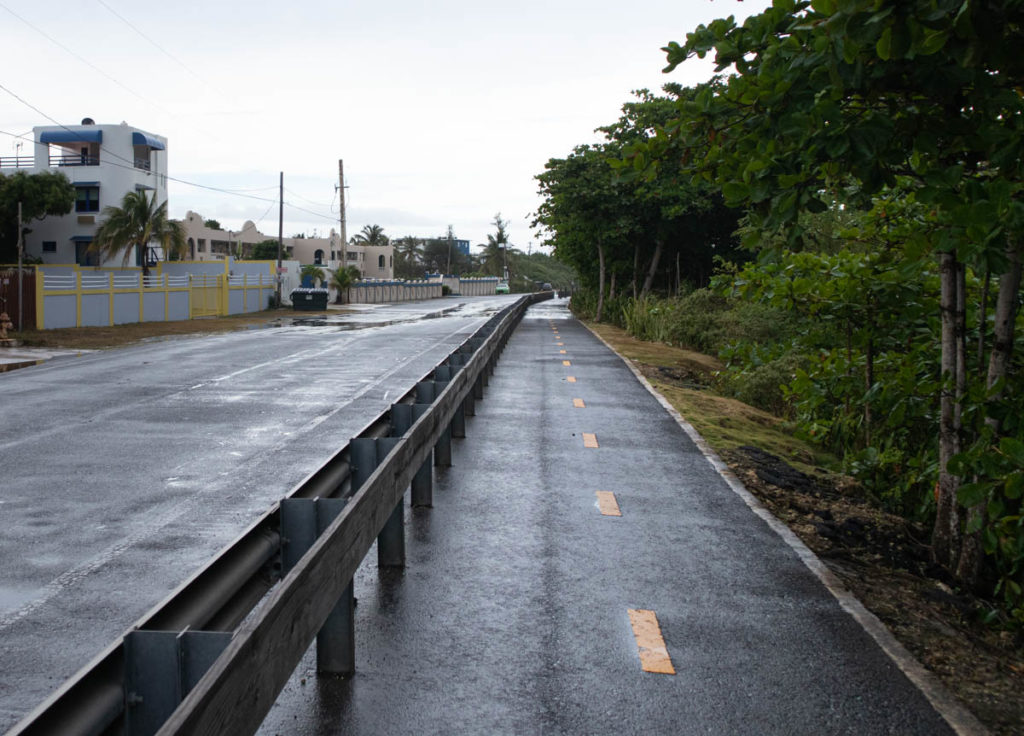
Wide bike path separated from road by metal barrier

Non-cycling culture

I recently visited a friend in Puerto Rico, my first time on the island. I was surprised at just how pervasive car culture is there; public transit is virtually non-existent (there aren’t even inter-city buses), as is biking for transport. Our friends own a decent car, and were proud to drive us around the town and to tourist destinations on the coasts. When we’d suggest that we might walk the quarter-mile into town, or wander the streets of Ponce or Isabela, they were genuinely mystified. Why would you do that? We have a car, we can drive you!

Let’s Bike Oakland officially adopted

The new Oakland bike plan was officially adopted by the Oakland City Council last night. I have my critiques, of course, but I also want to give credit where it’s due. The plan represents probably the best effort possible in our current planning environment, and it’s largely the result of dedicated work by some of the folks involved who pushed back against structures which are not designed to address topics outside of infrastructure. Because of that, there’s a lot more in the plan about community programs and equity than would ever have been the case otherwise.

Cycling and development

Andy Singer (who you may know from his “No Exit” cartoons) today posted on streets.mn about the possibility of re-purposing part of a railroad bridge across the Mississippi to extend the popular Midtown Greenway. For me, this resonated with my take-away from last week’s Mobility4All panel, of how bike infrastructure became associated with gentrification partly because the bike advocacy movement chose to pair infrastructure with economic development to gain political influence.

A day with Rich City: Self-Care Sunday and Mobility4All

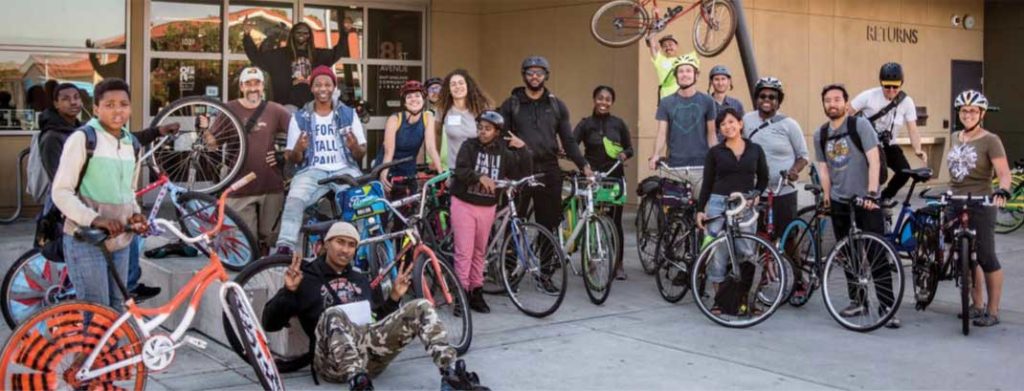
I’d been looking forward to this day for six months, since Adonia Lugo had to cancel her talk at Rich City Rides in December. And in the meantime it had gotten even more interesting, because I’d gotten to know a bit more about Doria Robinson, and RB was joining to represent the Scraper Bike Team. I started by heading up for the weekly Self-Care Sundays ride out of Unity Park, where I got to have a number of interesting conversations with Naj, RB, and Phoenix, and then had the opportunity to meet and hear Dr. Lugo and the others at the great Mobility4All panel.

More on a bad idea

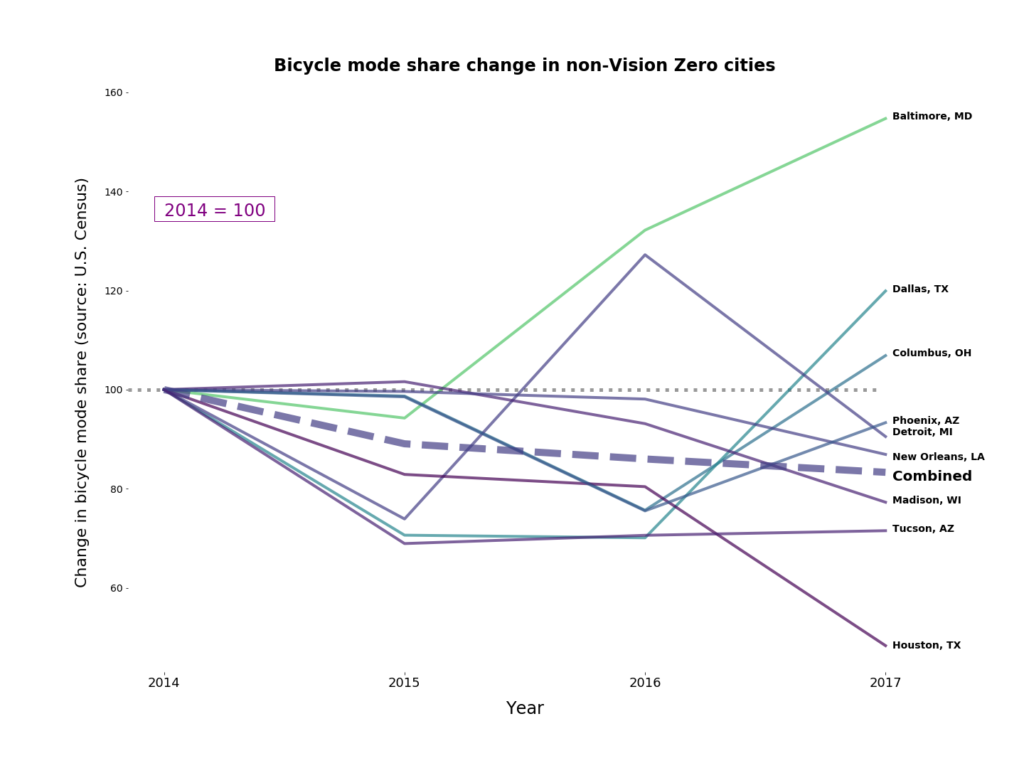
My post on Vision Zero’s threat amplification communications strategy got some interesting responses. One class of response as a sigh of relief, from advocates and city officials who don’t want to adopt such a confrontational style. Another was an interest in comparison data; what happened in non-Vision Zero cities over the same time frames? An entirely reasonable question, and easy for me to research.

Scroll to Top