I had the pleasure of participating in Bike!Bike! West 2026, a conference of community-based and co-op bike organizations that I’d been unaware of until my friend and colleague July decided to lead a regional conference here in Oakland this year. July attended the international Bike!Bike! conference in Mexico City in 2025, and was so inspired by the community they met there that they took on the daunting task of putting on a multi-day anarchistic event.
The 200+ participants came from as far away as Cleveland, with contingents from Chicago, Colorado, Texas, Arizona, and from all over California. Some folks were Bike!Bike! veterans who have been part of the event for years; others, like me, were joining for the first time.
Friday: The Bike Fix, Rock the Bike, and East Bay Bike Party
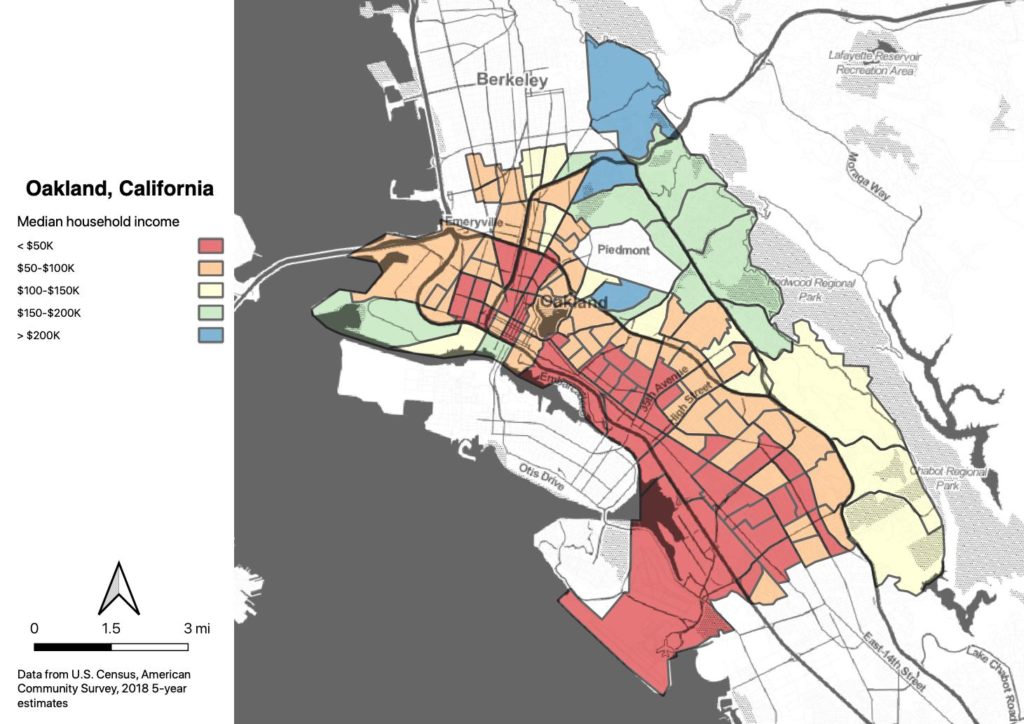
To start the day, I led a ride out along the Oakland shoreline towards The Bike Fix at the 81st Avenue Library. It was a great day to be at MLK Regional Shoreline, and the ride prompted good discussions about climate, sea level rise, and the racist legacies of freeway and rail construction in Oakland as we worked our way out from the shoreline into the neighborhoods of Deep East.

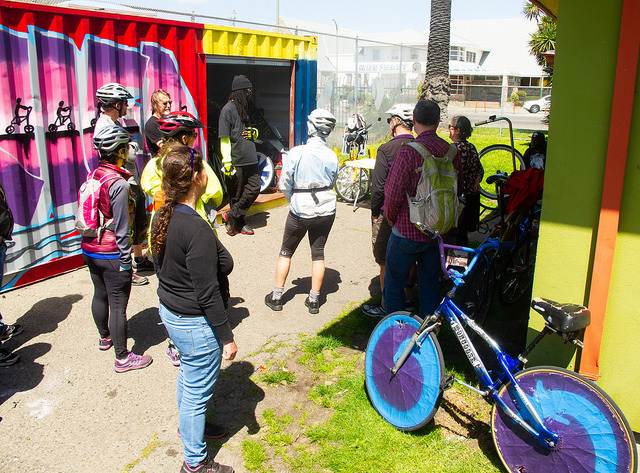
The Bike Fix offers free repairs and small parts to anyone who comes by. Their setup is really good, with multiple workstands and well-stocked tool chests, allowing anyone to jump in and start wrenching. The place was hopping, with a backlog of bikes needing work. A few of us joined the Oakland Library staff in helping out the community members, while others toured the shop and the library (which is a great facility, you should check it out).

From there, the group rolled to Rock the Bike back in North Oakland, where Paul was hosting a pre-Bike Party dinner, with the pedal-powered stage and blenders.


Then, a huge East Bay Bike Party out to Middle Harbor Shoreline Park. The theme (“Bringin’ Sexy Back”) was a good fit for Booty’s playlist.

Saturday: Great Ride of Return, sociology, and non-profit management workshop
Day 2 began with Cycles of Change continuing their Great Ride of Return series for Palestinian liberation. I brought Booty to provide sound support; the ride was big enough that one speaker wasn’t enough. We mostly chanted, with Diego and others at the front leading, and me leading responses from the back. Most of the response was positive except for one coked-up jogger shouting “Go Israel”.

The ride ended at the Lake Merritt amphitheater, where an eclectic panel of advocates, city staff and UC Berkeley faculty discussed the sociology of bike infrastructure and city planning, which was pretty well received by a crowd of 30 or so.

I felt the panel did a bit of handwaving about street safety’s disproportionate impact on Black and brown people, which I’d written about back in Oakland’s Slow Streets days. [TL;DR: Everything bad in our society disproportionately impacts Black and brown people, so unless your project centers the needs of Black and brown people, you can’t use disproportionate impact as justification for it.] Professor Michael Mascarenhas contributed with research he’d done on bike infrastructure as a tool of gentrification. I commented with my view, which is that bikes exist within our structures of racism, classism, misogynism, and ableism, and anything we do has to grapple with those structures or we will reinforce them.
After the discussion, much of the group headed over to the event HQ for a series of discussions, including one with Chris Carlsson, Critical Mass co-founder, who was speaking on how he came to realize that it was a problem that Critical Mass was dominated by white dudes. He said that part of why he likes East Bay Bike Party is that it’s more representative of all kinds of communities. (Which is true! Though perhaps less so than a few years ago).
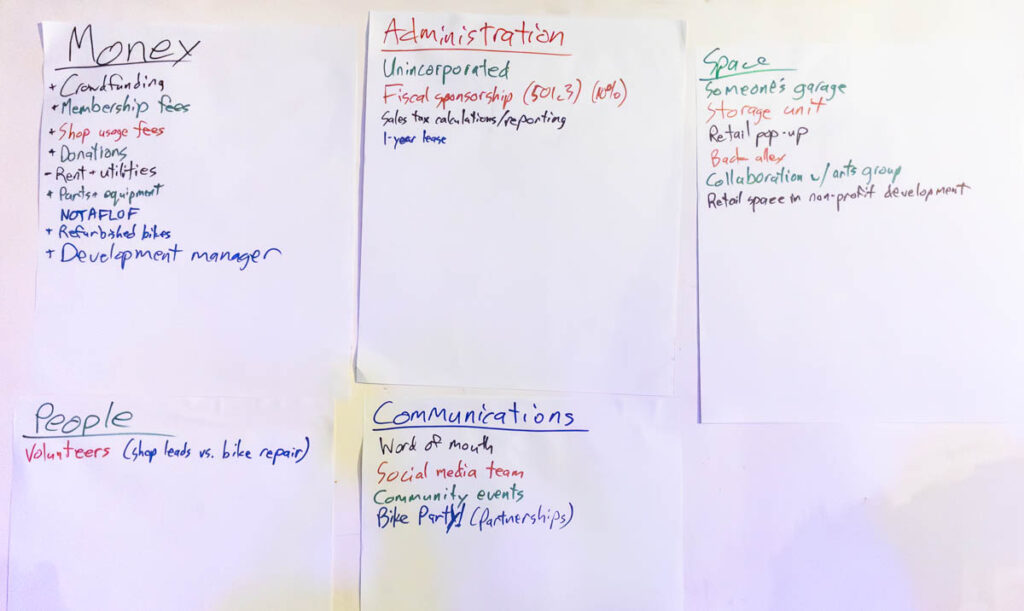
I didn’t get to see Chris’ whole talk because I was preparing to facilitate a session on running small community-based bike organizations. I joined up with the San Jose Bike Clinic, who’d prepared a talk on their co-op; I took notes to extract some themes and categories, then worked with the audience to talk about the different kinds of ways orgs were meeting similar challenges.
San Jose Bike Clinic is an all-volunteer group, which has been through a fairly typical progression in its organizational development. It began as something happening in someone’s garage, and has grown over the years into a fiscally-sponsored non-profit with its own dedicated space. (Silicon Valley Bike Coalition is the sponsor).
After SJBC finished, I asked a few questions about the organizations in the room. Most are formal non-profits, either fiscally sponsored or independent 501(c)(3). About half of them, like SJBC, were all-volunteer. Most of the rest are small, with 1-5 employees; the largest in the room, BICAS (from Tucson), has been operating since 1989 and has over 10 staff members.
Some of the issues are common to everyone; for example, finding space, which often began in someone’s garage, then moved to a storage unit or shipping container, and then into shared space until the group developed enough capacity to build out its own retail and storage. The orgs in the room are at different places along that spectrum, but the stories are similar.
The conversation dove into how the orgs are different, and especially focused on two major inflection points: all-volunteer vs. paid staff, and fiscally sponsored vs. independent 501(c)(3).
Volunteer vs. paid staff
There’s a big jump between zero paid staff and one, even if the one employee is just part-time. Having paid staff adds a lot of complexity and expense (worker’s comp insurance, social security and payroll taxes, to name a few). Managing payroll also adds risk; people will notice if their paycheck is missing or wrong, and they have legal recourse to make you fix it. So, paying staff requires good administrative systems, and reliable funding, both of which are challenging for small non-profits.
Independent 501(c)(3) vs. fiscal sponsorship
Going from zero to one is even trickier for fiscally-sponsored orgs. The biggest sponsor risk for volunteer orgs is in fund accounting. Non-profits typically have only one bank account, and when there are multiple fund sources and encumbrances, the sponsor must be disciplined in their accounting and spending, lest they not have cash on hand when a sponsored org asks for its money. The Bay Area has recently seen several non-profit meltdowns, including the high-profile crash of the San Francisco Parks Alliance. SFPA had been the fiscal sponsor of one of the orgs in the room, SF Urban Riders; SFUR lost their funds in the bankruptcy.
The downside of an independent 501(c)(3) is that you have to manage all these risks yourself. The upside is that you fully control your own finances and risks. Once your org has the capacity to handle those tasks, it’s worth doing. Hire a good administrative manager.
Sunday: Ride leader panel, Consensus, and Shenanigans
My Sunday began with a ride leader panel, facilitated by Megan, who is among the most active ride leaders in the East Bay. She was joined by Downhill Diva Maria (the Contra Costa Bike Champion of the year), Alyssa from All-Inclusive Riders Cycling Collective, and Mitch from Trans Galactic, all of whom have experience developing community rides. They enjoyed a good discussion about goals, communications, community norm-setting, and ride management on the road.

Back at BikeBike HQ in the afternoon, the group got together for “Consensus.” Bike!Bike! is organized on anarchist principles, which means that all decisions should be consensus-based. The group talked through what worked well and didn’t, and what might happen next year with the main Bike!Bike! event or another regional Bike!Bike!. The discussion was collegial and positive; it might be hard to see what consensus was actually settled upon, but I’m sure that this group will work together to put on something cool again.

After consensus was Shenanigans, which involved homemade nerf-style weaponry, Cybertruck piñatas, and a chainring battle axe. We also played a game of footdown; I was on unicycle so of course I won. (Don’t mess with unicycle basketball players.)


All in all a great weekend with the alternative bike community; thanks so much to July, Oakland Secret, Bay Area Maker Farm and everyone else who helped make it a reality.